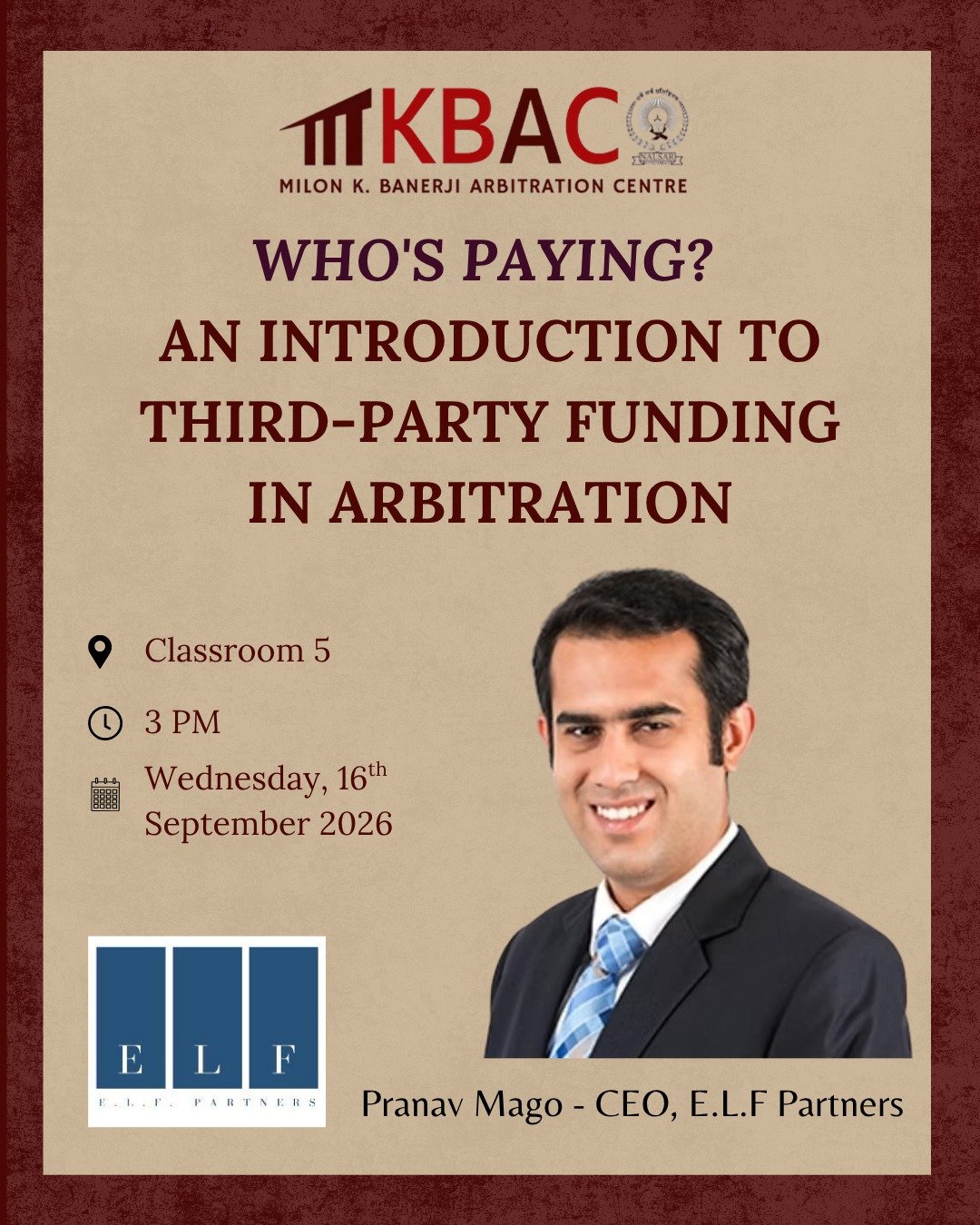
The Milon K. Banerji Arbitration Centre hosted a guest lecture on Third-Party Funding (TPF) in arbitration, delivered by Pranav Mago, Founder and CEO of E.L.F. Partners. The session offered students an introduction to one of the fastest-growing areas in international arbitration, combining doctrinal history with a practitioner’s perspective on how funding decisions are actually made.
The lecture opened with a foundational question: is third-party funding even legal in India? Mr. Mago traced the answer back to the doctrines of maintenance and champerty in English common law, and to the Privy Council’s 1876 decision in Ram Coomar Coondoo v. Chunder Canto Mookerjee, which recognised the legality of litigation funding arrangements in India well ahead of comparable developments in England. He connected this early judicial recognition to later statutory amendments in state Civil Procedure Codes and to the Supreme Court’s 2018 ruling in Bar Council of India v. A.K. Balaji, which confirmed the modern position.
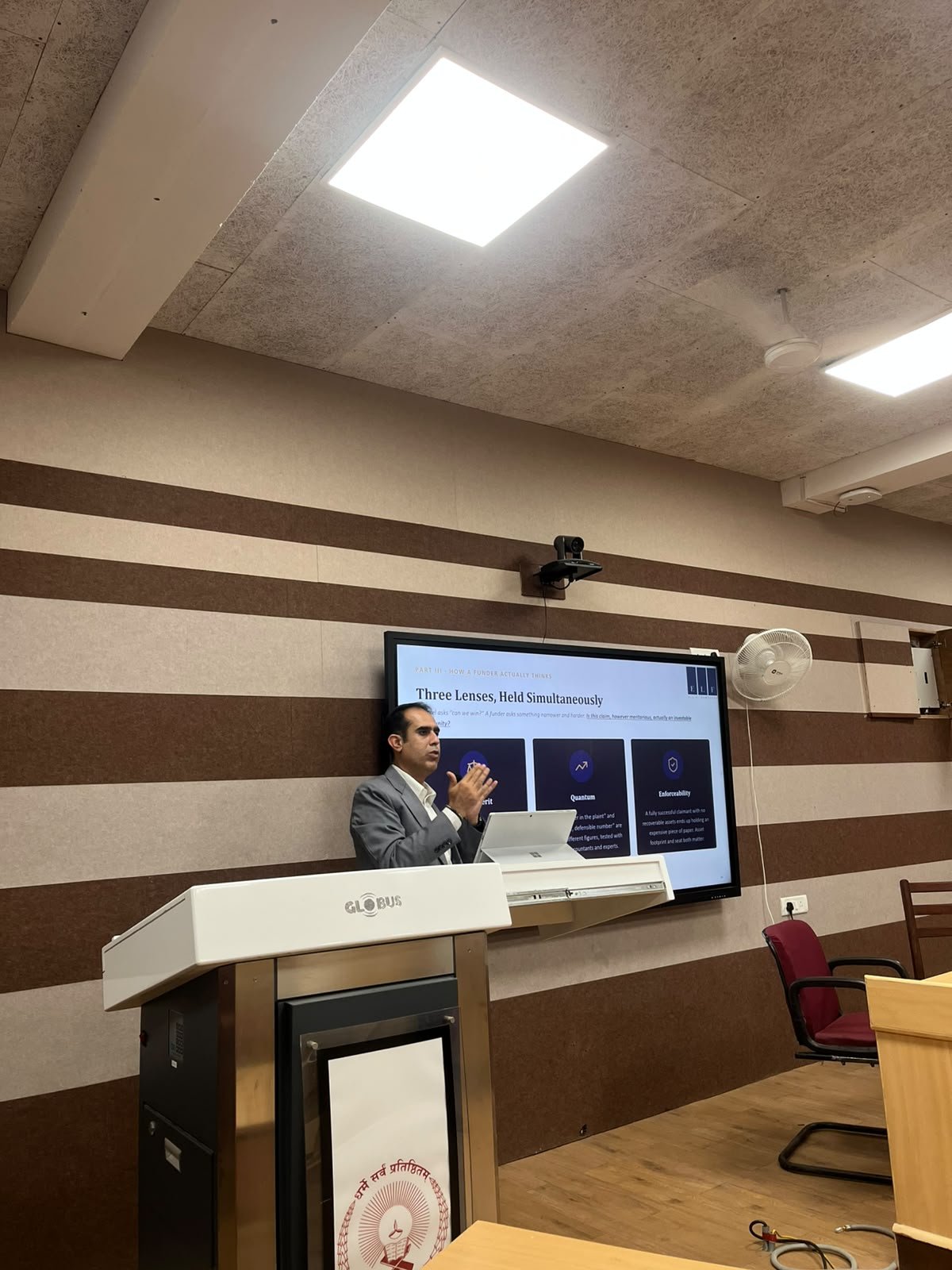
The talk went on to place India’s experience alongside the regulatory approaches taken in the UK, Singapore, and Australia, highlighting how each jurisdiction has handled the legality, disclosure, and regulation of funding arrangements differently. A significant part of the session was devoted to explaining how funders evaluate a potential claim, walking students through the three lenses of legal merit, quantum, and enforceability that shape a funder’s investment decision. Mr. Mago also discussed the growing role of institutions in requiring disclosure of funding arrangements and recent developments around the recoverability of funding costs.
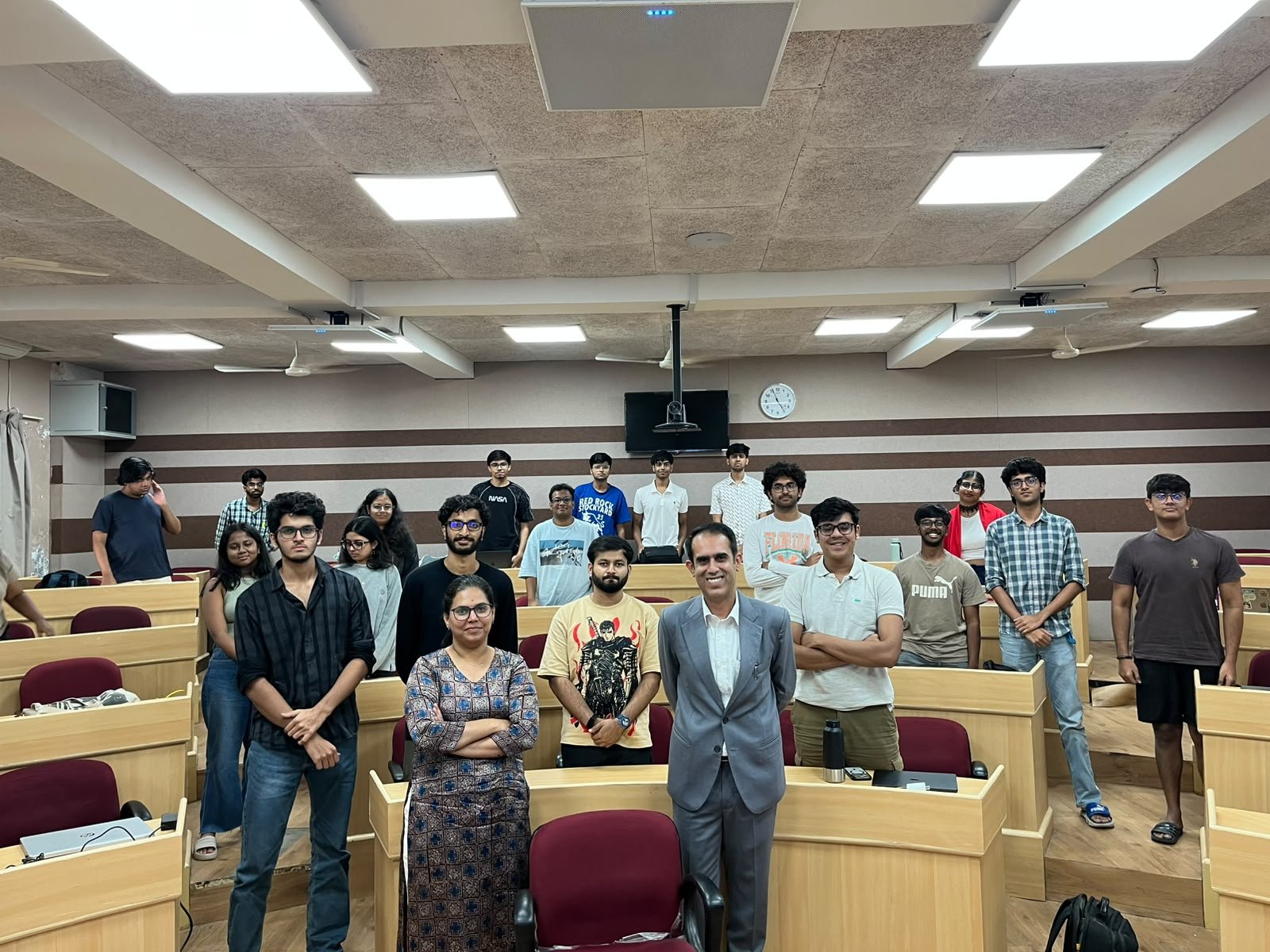
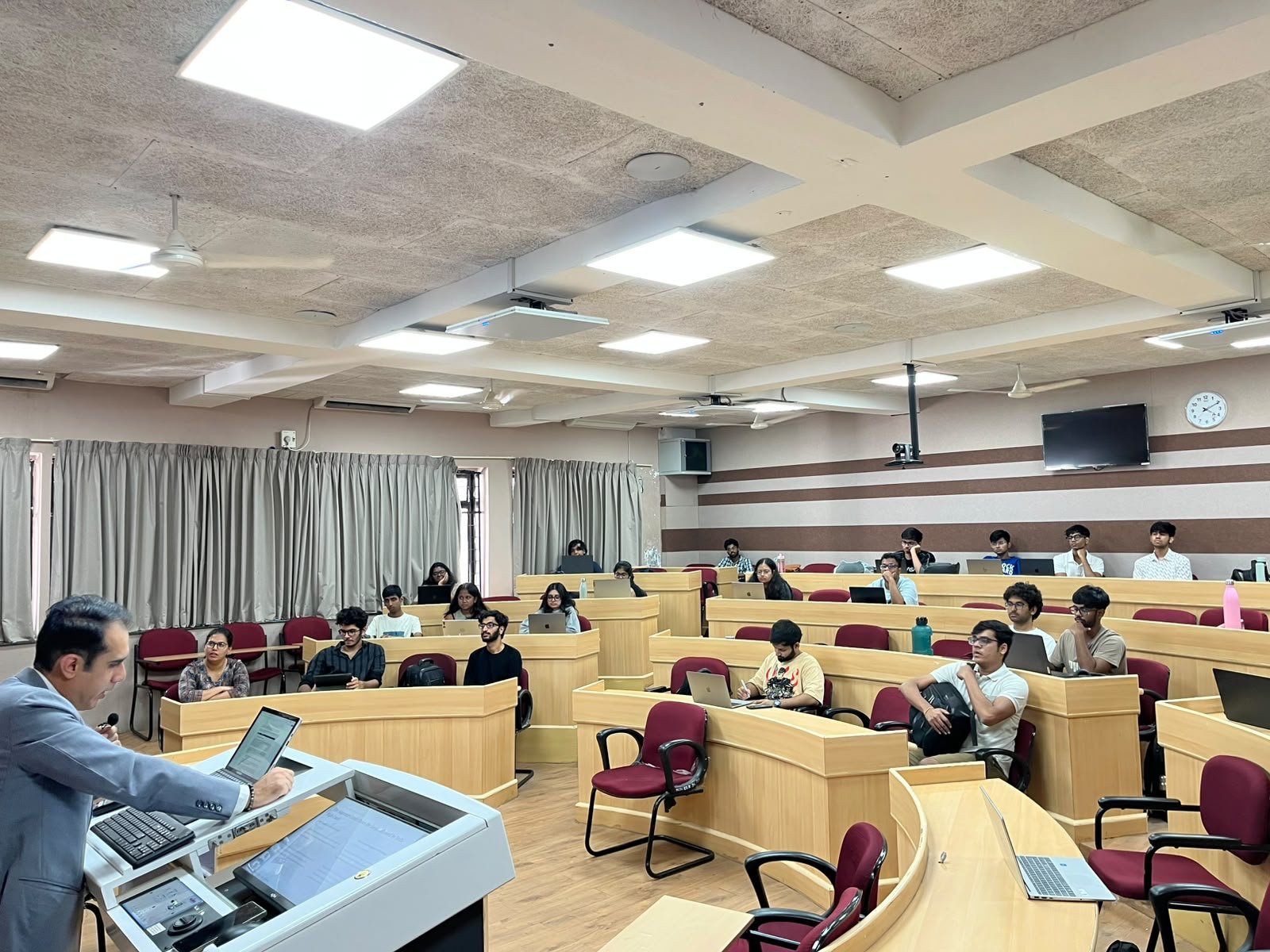
The session was informative and thought-provoking, with a strong turnout and active engagement from students throughout. It offered valuable exposure to a subject that sits at the intersection of arbitration practice and finance, an area increasingly relevant to the future of dispute resolution in India.